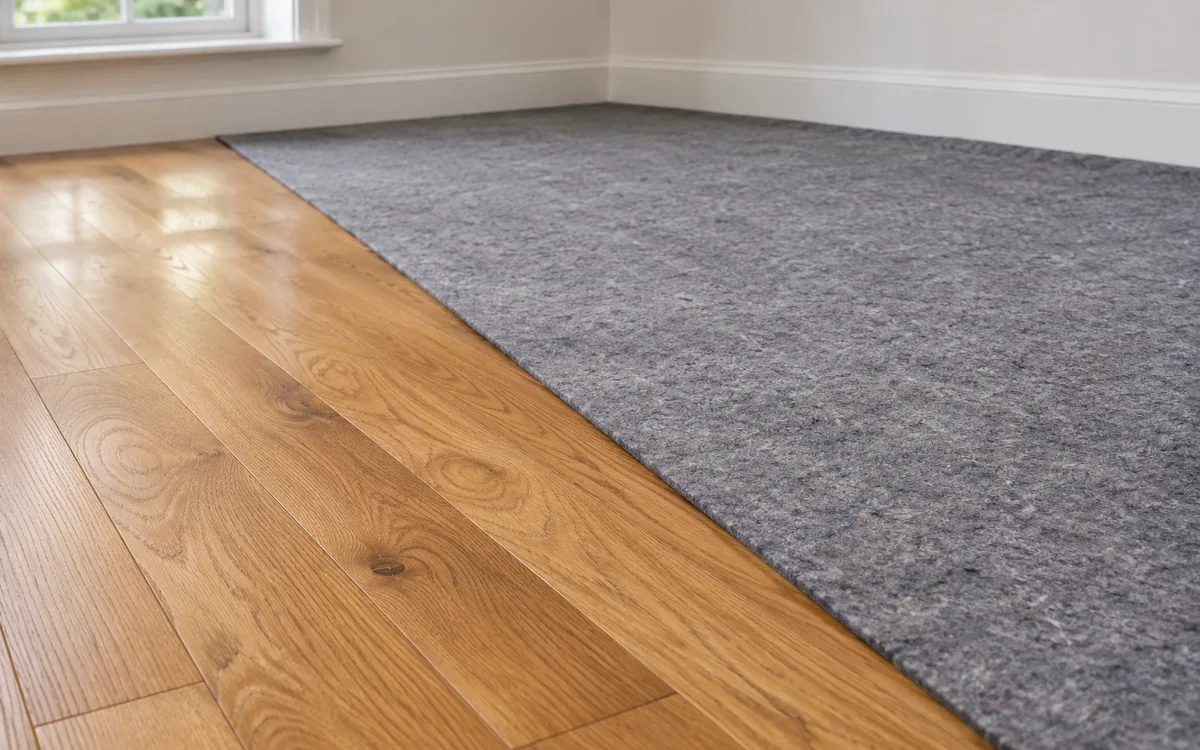
Good temporary protection for hardwood floors starts with the finish, even if the same timber runs through every room. Factory-finished boards, a new site-applied coating and an older oiled floor can have different restrictions on when and how they may be covered.
Ask two questions before the next trade arrives
Confirm when the floor may be covered and what may touch it. Get the answer from the installer or finish supplier, including any requirements for vapour movement. Clean the walking route and try the proposed contact layer on a discreet area where approved. Keep adhesive off the floor unless the finish supplier specifically permits the selected product and use.
Protect turns and access points
Run a hand along the underside before laying a new section to check for trapped particles. Look at door openings, ladder feet and places where carts turn. Inspect those points after the first trade passes and when a new crew takes over. Fix a shifted join early and take up wet or contaminated cover as directed.
Compare the Breathable Floor Liner with the finish supplier’s instructions and the site’s expected traffic. The breathability guide explains how to ask for the layer data. Where the route changes from timber to stone, use the separate marble suitability checks before extending a covering into that zone.