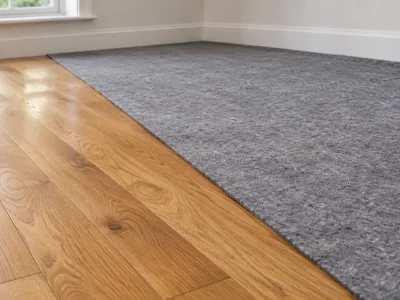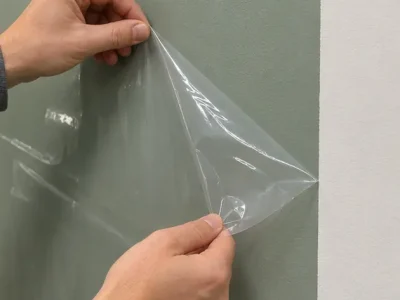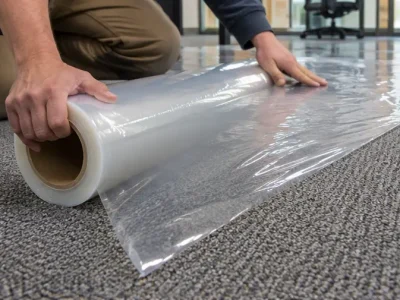
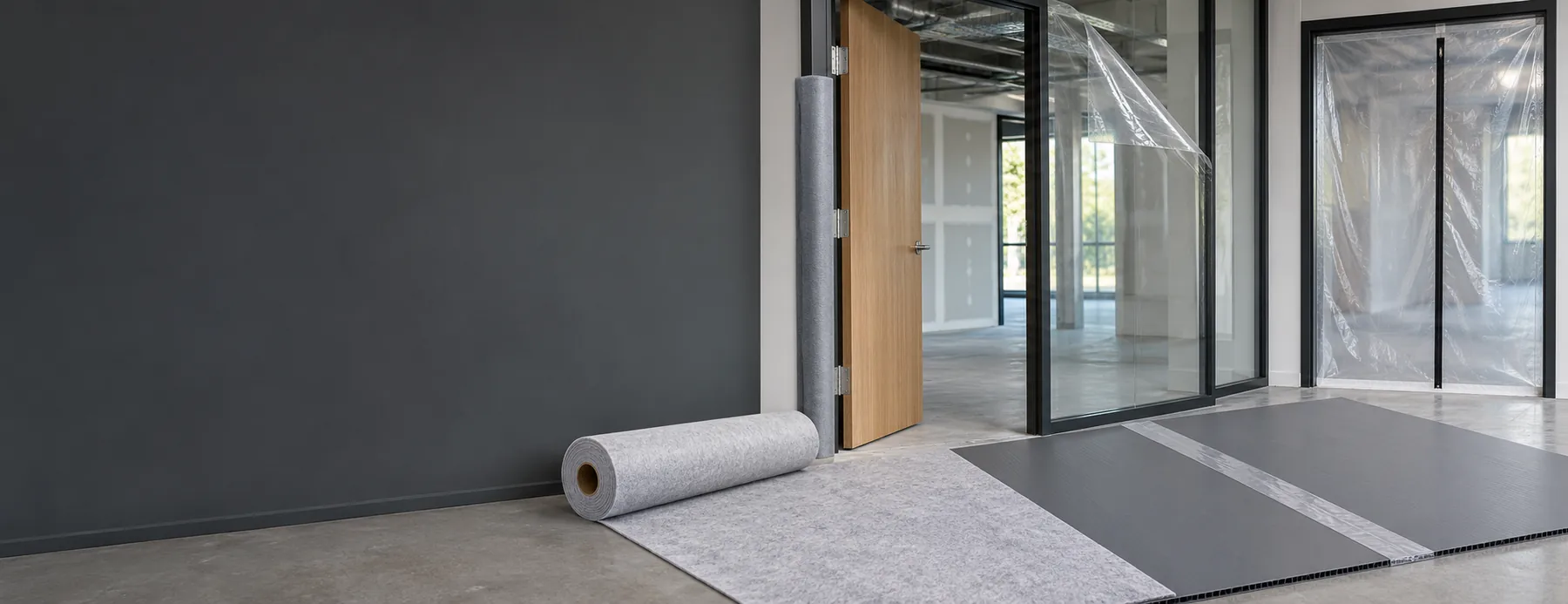
The finish supplier is the best starting point when you need to decide when to use breathable floor protection. Ask when the floor can be covered, whether vapour needs to pass through the covering, and which layers may contact the surface. Breathability, how a cover handles liquid and how it stands up to traffic are separate decisions.
Ask what was tested as a complete covering
Ask for vapour transmission data for the finished product. A porous fabric face tells you little about the backing underneath it. Confirm what the reported result measured and which conditions and test method were used. Where the job has rainwater, spills or wet cleaning, compare liquid resistance or absorbency separately.
Check how seams and traffic affect the assembly
Find out how overlaps, joint tape or an overlay change the layers in the covered areas. Mark wheel loads, turns and entrances before choosing thickness and backing. Keep the underside clear of grit and arrange an inspection after a spill or when the area changes trade.
Get the material and test details for the proposed Breathable Floor Liner. Use the hardwood guide or marble guide to check the finish-specific questions before installation.