Finished surface protection for mechanical renovation starts where parts enter the building. Even when cutting is confined to a single room, moving equipment and materials can put floors, frames and wall corners on the route at risk. Mark the route and work zone before choosing a covering.
Walk the route with the crew
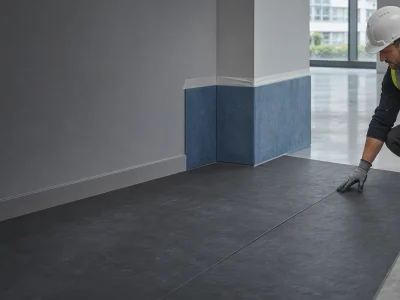
Ask how parts will be carried and where tools and removed equipment will be set down. Check cart turns, door jambs and thresholds, then match coverings and guards to the finishes and planned loads. Where the route uses an elevator, use the elevator route checklist to secure operator approval for the arrangement.
Define the work zone and check it at each return visit
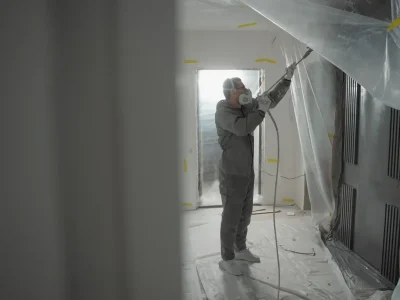
Agree where the boundary around the work will run and which access points must stay available. Choose any sheet and opening detail around the site’s requirements. Check overlaps, anchors and edges after moving equipment through the boundary. Inspect near drains, access hatches and connections where another trade may need to work. Record which covers and edges should come off before the area reopens.
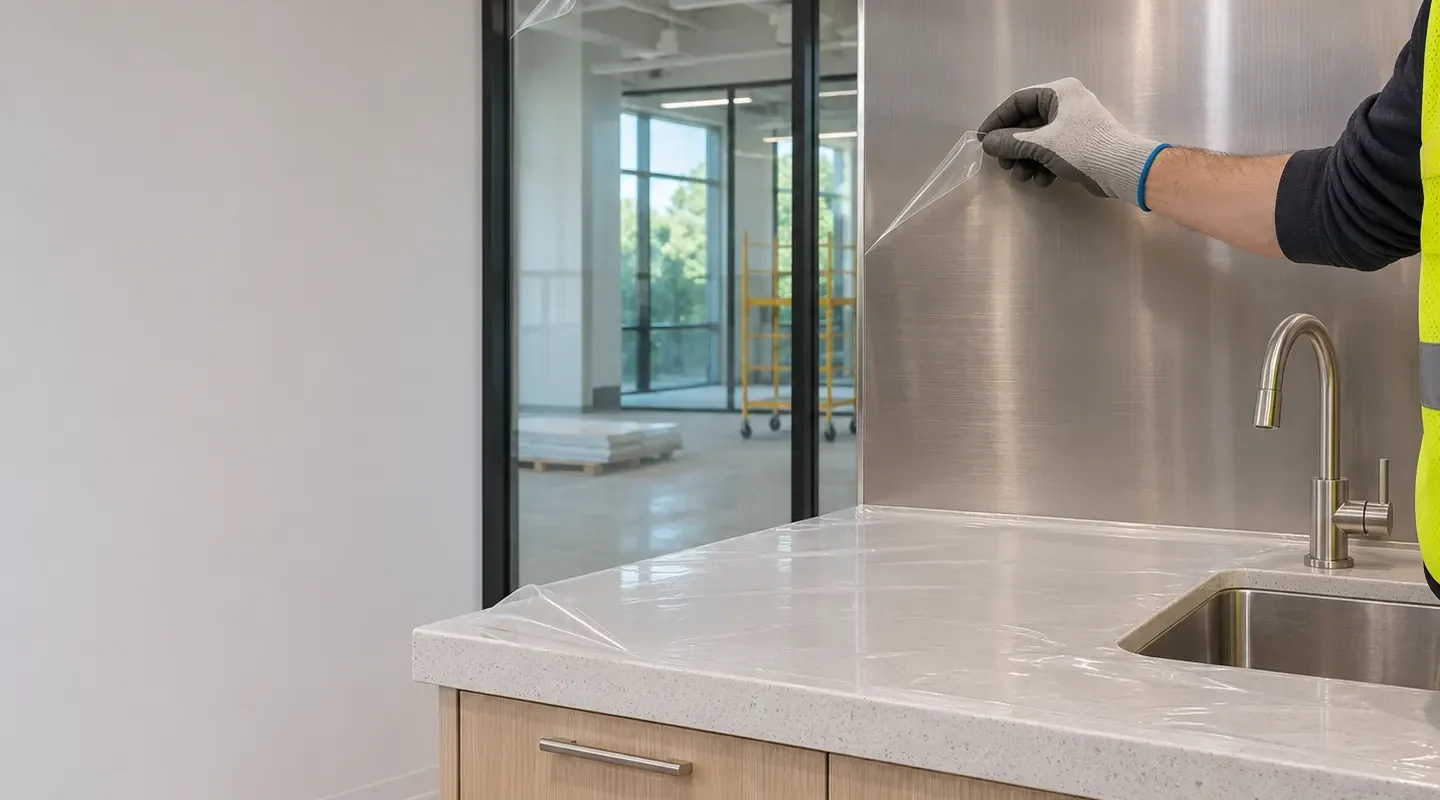
Send a route sketch, the surfaces involved and access arrangements with your enquiry. Compare films for finished surfaces and dust containment options by their respective application conditions.