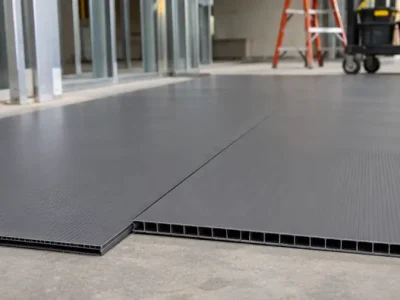
A cheaper roll can cost more if it has to be replaced halfway through a job. A reusable cover only pays back if it can be lifted cleanly and used on another suitable surface. To compare reusable vs single-use floor protection, start with the same area, level of traffic and number of work phases.
Compare the cost for the area actually protected
Ask for roll or sheet price, usable coverage after overlaps and trimming, and delivery cost. Then enter the labour for laying, checking, removing and disposing of each option. For a reusable cover, include time to clean, inspect and store it, plus replacement for the portions that fail inspection. Keep these lines separate so a favourable material price does not hide extra labour.
Give reuse credit only where it is feasible
On a job with three successive corridors, a cover can move forward only if the first corridor is handed over before the next one needs protection. Record the area still fit for use after removal. Exclude sections with grit stuck to the underside, torn joins or an unstable backing. Check that the next floor finish is approved for the material.
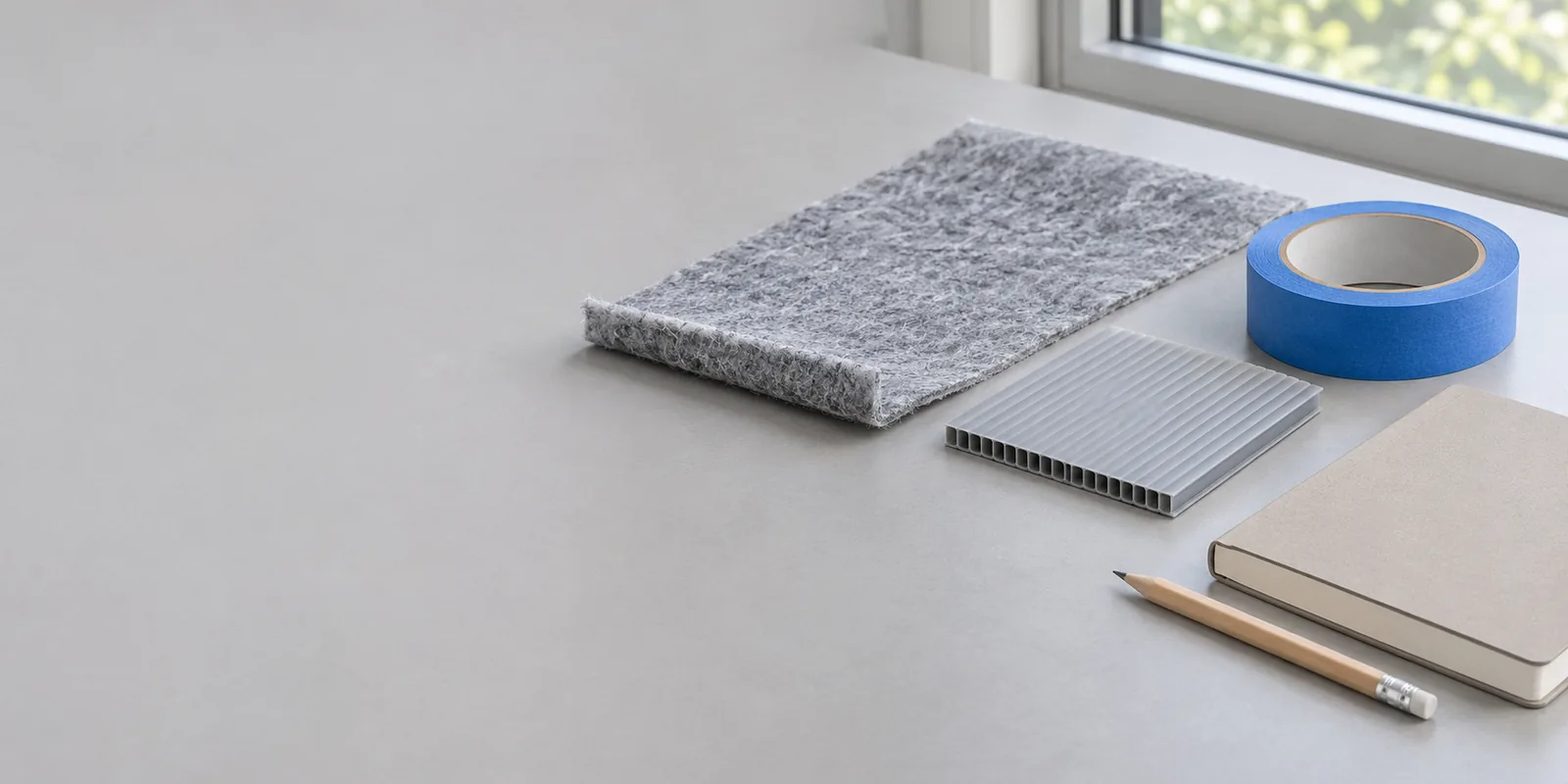
Compare the total cost per square metre actually covered across the programme. Use the floor liner reuse checks to decide what to count, and the material planning guide to separate usable offcuts from waste. Request comparable dimensions and packing for the breathable liner and protection board you are considering.